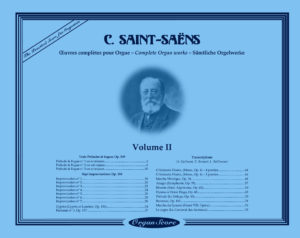
Complete Organ Works of Saint-Saëns
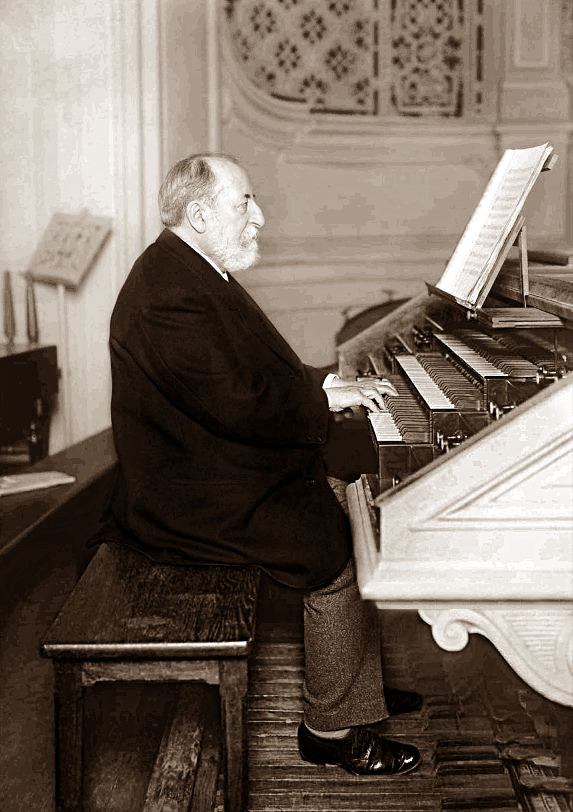
The Composer, Pianist, Conductor and Organist
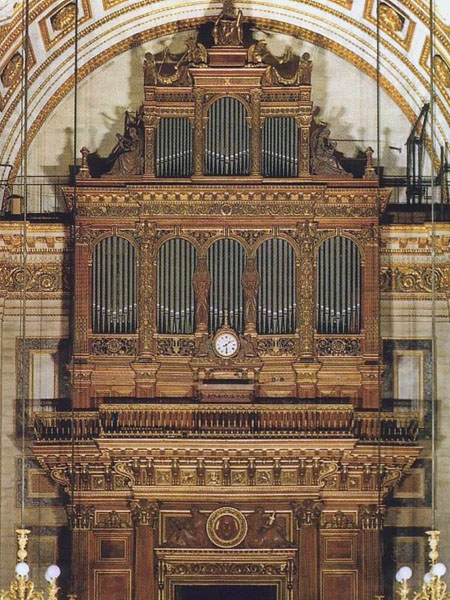
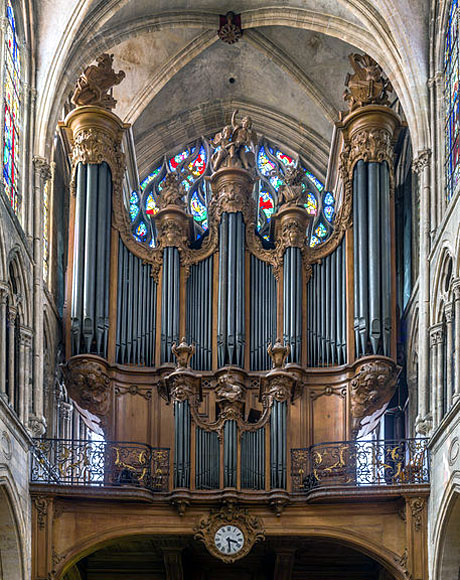
Camille Saint-Saëns was born in Paris on 9 October 1835 and died in Algiers on 16 December 1921. A child prodigy, he gave his first concerts at the age of eleven and went on to enjoy a brilliant musical career. Today he is chiefly remembered as a prolific and inspired composer of the post-Romantic era, but he was also a virtuoso pianist, conductor and organist. He held the position of organist at several major Parisian churches, including Saint-Merry, La Madeleine and Saint-Séverin.
As a composer, Saint-Saëns is often regarded as a devotee of counterpoint and an admirer of the Classical masters such as Mozart and Haydn. In his organ music, this taste for clarity was undoubtedly reinforced by the semi-classical, semi-symphonic character of some of the instruments he played (notably at Saint-Merry and Saint-Séverin).
The Organ Works
Saint-Saëns’s organ output spans his entire career, from his early works (pieces for harmonium, the First Fantasia, rhapsodies on Breton hymns, etc.) to the mature compositions (Preludes and Fugues, Op. 109; Seven Improvisations; the Third Fantasia). Sometimes highly free and picturesque, sometimes more solemn in character, his organ music is always marked by great inventiveness. And although its language is often refined and disciplined, none of these works ever lapses into sterile academicism.
This complete edition would not be truly complete without the transcriptions made by Alexandre Guilmant (1837–1911), Émile Bernard (1843–1902) and Léon Boëllmann (1862–1897), three French organists who were contemporaries of Saint-Saëns. As these transcriptions were produced during Saint-Saëns’s lifetime, may they not, in a sense, be regarded as almost bearing his own authority?
Pieces for Harmonium
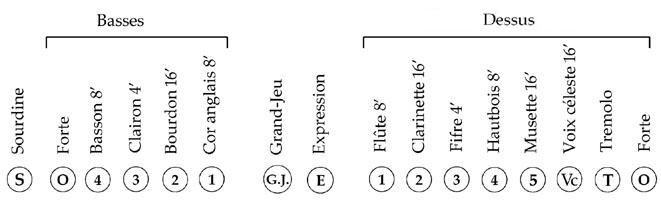
Volume I contains several pieces originally written for harmonium, some of which include registration indications specific to that instrument. Although these works are now generally performed on the organ, it is important to understand the meaning of these markings. To this end, a description of the classical French harmonium has been included.
The OrganScore Edition
The works are distributed across two volumes and arranged in an approximately chronological order. However, for reasons of clarity and coherence, the transcriptions have been grouped at the end of Volume II. As with all OrganScore editions, the organist can perform directly from the score without page-turning difficulties, benefiting from excellent readability (see the page on the readability of OrganScore editions). (see the page on the readability of the OrganScore editions).
VOLUME I
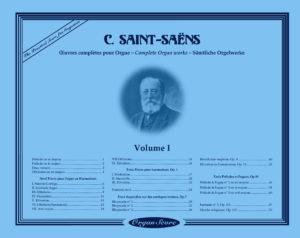
Pièces diverses (2 Préludes, 2 Versets, Offertoire), 9 Pièces pour Orgue ou Harmonium, 3 Pièces pour Harmonium Op. 1, Fantaisie no 1, 3 Rhapsodies sur des Cantiques Bretons Op. 7, 3 Préludes et Fugues Op. 99, Fantaisie no 2 Op. 101, Marche Religieuse Op. 107.
VOLUME II
3 Préludes et Fugues Op. 109, 7 Improvisations Op. 150, Cyprès Op. 156, Fantaisie no 3 Op. 157, Transcriptions : O Salutaris Hostia, Marche Héroïque Op. 34, Adagio Op. 78, Rêverie Op. 60, Hymne à Victor Hugo Op. 69, Prélude du Déluge Op. 45, Berceuse Op. 105, Marche du Synode (Opéra ʺHenri VIIIʺ), Le Cygne (Carnaval des Animaux).